NO THE GALLERY IS NOT CLOSED
We have been trying to downsize the Gallery and go back to having other commercial galleries display and sell my art just as we used to in the 1970's, 1980's and 1990's but to close our gallery is like trying to stop a freight train. IT IS OPEN BY APPOINTMENT, which simply means give us a call to make sure we are here. Our website is still a place to show and sell my art and eventually, as I show in a number of other galleries, that will change to simply displaying new pieces and showing what galleries handle my work.
At present I am with Gallery 23 in Nanaimo and will be adding other galleries as time goes by, however our gallery here is still a place to display my new work and many of my prints, framed and unframed. Please feel free to come and browse but give us a call first.
Sunday, June 3, 2012

Friday, February 3, 2012
Finishing "Seven Up"


The top photo was taken in my studio and shows how to create some more depth into the painting by adding a kelp bed in the foreground water. Acrylics are somewhat transparent so the kelp strands had to be painted over many times to make them stand out. Also I increased the warmth of the entire scene by painting several glazes of orange over it all. The next step was placing the orca pod into an interesting design. I did this very carefully using the many sketches I had done of them. Many of these sketches had been done from videos I had taken but a few were actually done on the spot - an often frustrating experience but good practice. After I placed the whales where I thought they would be most effective I touched up highlights on everything; the boats, the shoreline, the kelp, the rocks and tree, just to give it a bit more contrast and punch. The second image is the final one and it is easy to see how much more work was done on it. The joy of working with acrylics is that they can be completely altered in their final stages if so desired. But this is also their curse. When to quit?
Tuesday, December 6, 2011
Step 2 on "Seven Up"

The next step in this painting is to give it some interest in the ocean area. After all, it is literally"framed" by the shoreline, cliffs and the hills in the distance. The painter has some important decisions to make at this point: Shall the water be calm and therefore reflective or shall it has some waves or ripples and texture? This will change the whole nature of the water and the feeling of the scene. A calm surface will give you a feeling of peacefulness when viewing it and a textured surface will create some excitement. Since I had planned this to be a painting showing some action with fishing boats and whales, the textured surface seemed a natural choice. I began to paint wavelets on the surface of the calm, blue water.
After I finished the wavelets the water still seemed too benign. After spending countless hours on the ocean, especially in Johnstone Strait, I knew I had to add some more turbulence. Often the wind and currents change the reflection of the sky so that, in the distance, there is a profound change in the colour of the water and it becomes brighter and lighter if the distant water is calmer (less wind and current) or it turns darker and more grey if it is turbulent. Well, Johnstone Strait is turbulence re-incarnated, so my choice was easy! I painted a dark line of water just below the far shore.When executing a painting, it's always a good idea not to concentrate too much on one area but keep working all over the place. This unites the whole thing into becoming ONE PIECE instead of separate units. I brought my attention back to the foreground and decided to try to make the Kelp bed take shape, giving the painting some depth and uniting the distinct shoreline with the water. At this point I began to wonder about colour. I had been sticking to the reality of the blues and greens of our seascapes but at this point it didn't look very exciting. I was determined to "warm up" the painting so I cautiously added some warm clouds at the top and started to incorporate some of these colours into the rest of the painting. Adding the fishing boats to the scene gave it more life and depth. How much farther to go with the warm colours? Next Blog-----

Sunday, November 27, 2011
Step by Step on "Seven Up"
In the last blog, I promised to demo some of the steps in doing a marine scape. This is one of the last paintings I did called "Seven Up on Johnstone Strait, a 20x24 inch acrylic on deep canvas and this first image is the finished product, presently hanging in Gallery 223 in Nanaimo. During the next few blogs I will show it in its various stages of production and explain how it came about.
The next image shows the very beginning of the painting. I began with a cool colour scheme of blues, typical of summer in the area. I usually begin an acrylic with flat washes of colour in all the shapes that I have used as a composition, making sure that all are interesting and different in size. This is actually the most important part of the whole process. If your design is not correct, you can use the mostbrilliant technique with a myriad of colours but it will still be weak and uninteresting. At this point, you must check to see if all your shapes within the painting are interesting and different.
The sky, mountains, hills and ocean are all horizontal and, although different in size, beg to have verticals or diagonals for relief. The beach and cliff provide this interest, with the cliffs being slightly more vertical and forcing your eyes toward the ocean. If the eyes go there, thay must have some entertainment which must come next. (In the next blog!)

The next image shows the very beginning of the painting. I began with a cool colour scheme of blues, typical of summer in the area. I usually begin an acrylic with flat washes of colour in all the shapes that I have used as a composition, making sure that all are interesting and different in size. This is actually the most important part of the whole process. If your design is not correct, you can use the mostbrilliant technique with a myriad of colours but it will still be weak and uninteresting. At this point, you must check to see if all your shapes within the painting are interesting and different.

The sky, mountains, hills and ocean are all horizontal and, although different in size, beg to have verticals or diagonals for relief. The beach and cliff provide this interest, with the cliffs being slightly more vertical and forcing your eyes toward the ocean. If the eyes go there, thay must have some entertainment which must come next. (In the next blog!)
Saturday, November 12, 2011
At Last a new Posting on my Blog
 I must apologize for my tardiness in keeping this blog up to date. There have been some major changes in our family and in our life but everything is a bit more settled now and I can go on with keeping you informed and up to date. We are still running the gallery on a "by appointment" basis. "By Appointment" sounds so formal but really means give us a call before you waste your gasoline to come out here to make sure we are home.
I've done some interesting marine scapes and will demonstrate how I've done them on this blog in NEXT BLOG. In the meantime, if you look on my website and click on "Paintings", you'll find at the top of the list a new category called "Small Original Paintings". If you click on this it will present a blog with a number of new, small original paintings for sale. The November rains have come with a vengeance and I am enjoying the warmth of my studio with all sorts of new ideas! Check me out in a few days!
Tuesday, May 24, 2011
Commissions
Just finished a commission for a person in Germany. I enter the agreement to do a commission rather hesitatingly because it is usually a distraction from the work that is creatively straight from my Muse. When I accept it, the client understands that there is no time limit. This gives me the opportunity to work on the piece when I am in the frame of mind to do so. For instance, if the work is to be one of a beach scene, I will work on it when I am ready to explore that subject. This was a watercolour and the spirit was with me!
Did you know? Old watercolourists never die, they just wet their sheets!!!
Did you know? Old watercolourists never die, they just wet their sheets!!!
Saturday, May 21, 2011
South of the Border
Just got back from a road trip down to San Francisco. For several years we had been salivating with our friends about a drive down the Oregon coast to a possible San Francisco destination. We finally did it but our friends were limited to ten days. Two big revelations for me: Cannon Beach, which I idolized in my mind, was a cluttered, tourist trap with access to the beach severely limited by an endless row of beach houses. When I return I will make my base at Newport Beach and drive from there to a number of gorgeous areas within its circumference to paint and paint and paint! The other revelation was rather humbling for a Vancouver Islander. The Redwood trees were immense and much of the original old growth was saved. A highway called The Avenue of the Giants led through 35 miles of trees so large it seemed unreal. 35 miles of Cathedral Grove!!!

These were the highlights of an reconnaissance trip that gave us a really good idea of places to settle into and explore.

These were the highlights of an reconnaissance trip that gave us a really good idea of places to settle into and explore.
Thursday, April 14, 2011
Lady Ellen Point

Some twenty years ago, Western Forest Products very kindly cut a trail to the ocean from one of its logging roads in the area. Since Lady Ellen is on the flip side of Ledge Point, the peninsula directly across from Port McNeill, the logging road that goes to the Lady Ellen Trail takes off to the left from the Ledge Point road. For years, we used to go to the end of this logging road, where the trail began, and walk down to the ocean through groves of huge spruce, but when you reached the ocean, it was still a hefty two kilometers to Lady Ellen. When the tide was in it was touch and go because we often had to dodge in and out of the heavy jungle that lined the shore. Last summer saw the building of a state of the art hiking trail along this shoreline ending at Lady Ellen but slated to continue until it meets the Ledge Point road and trail. What a magnificent hike that will be! Rumor has it that you will eventually be able to begin this hike at Bear Creek in Port McNeill and circumvent the entire Ledge Point!
This small painting came about when I followed my wife, daughter and grandson on their jaunt to Lady Ellen to try out their luck on the pink salmon run. While they fished, I painted. None of us got skunked!
Monday, January 24, 2011
Mexico!
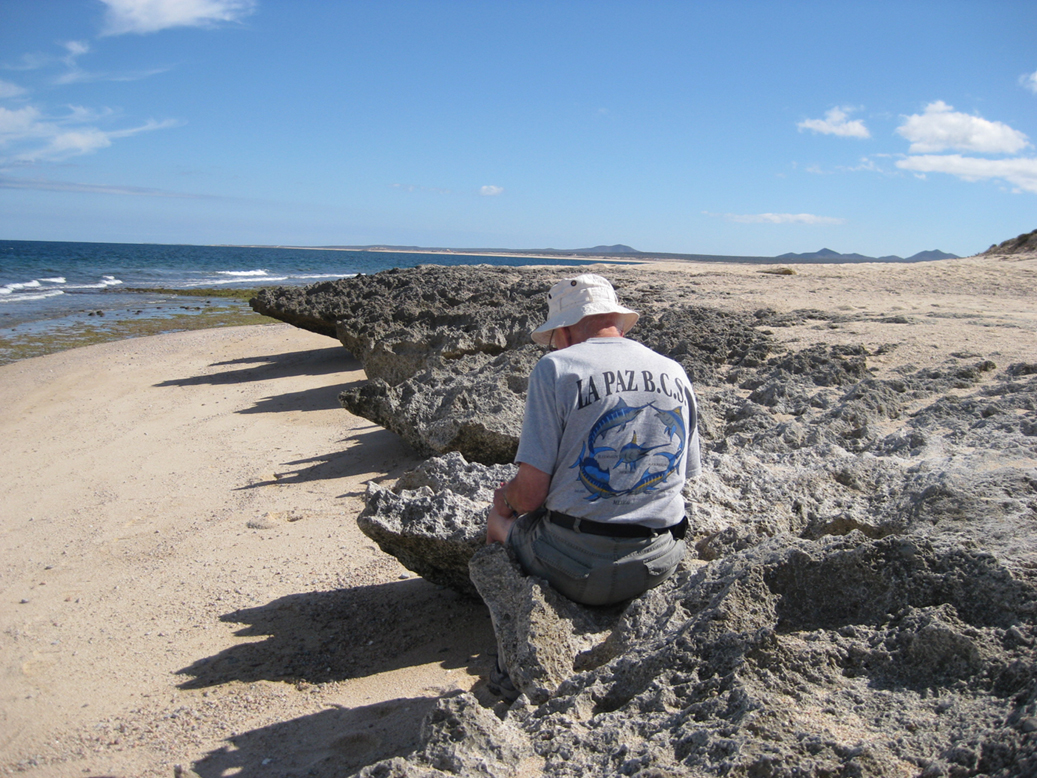

I'm back painting in my studio again, still working on a series of autumn on Mt. Cain. As the alders slowly turn to their beautiful spring browns I will be making my way into the North Island countryside to do some pleine air painting. See you again soon.
Tuesday, November 30, 2010
Where did November go???
On November 15th we took 7 new paintings to Gallery 223 in Nanaimo (on 223 Commercial Street). They are an excellent gallery but do not want to show anything behind glass; so you won't see any of my watercolours there.The owner, George Leschuk actually owns the building, which is unique among art galleries, has a generous sized area for originals and another area for prints and framing. On the second floor he rents out space to resident artists.
Some of the paintings we left with George are shown below. I added to my autumn on Mt. Cain series by concentrating on the bright foliage around the ski area.


 We hope to be going to ourdaughter Kathy's in Mexico for Christmas (Dec.11 to January 10) so hope to have a few Mexican scenes from there. Merry Christmas!! (or should I say Feliz Navidad?)
Some of the paintings we left with George are shown below. I added to my autumn on Mt. Cain series by concentrating on the bright foliage around the ski area.


Saturday, October 9, 2010
Happy Thanksgiving!!
I LOVE North Vancouver Island, our home for the last 36 years. Usually I can't find enough adjectives to describe its beauty, but this time of year I often wander afield to find fall colours because there are so few deciduous trees that show off in autumn. My favourite spots have been in the interior in the high plateaus of the Cariboo and the Chilcotin or to the old haunts of my youth in Eastern Manitoba and Northern Ontario.

Lately I re-discovered local colour that had eluded me, since in the fall during the last few years, I was making these excursions inland and over the prairies. I was looking at some photos I had taken several years ago of my grandchildren on Mt. Cain in autumn and the background colour knocked my socks off. Since it was early September, too early for colour, I used these old photos as references to create a 16x20 acrylic that enbled me to use my"hot" colours. I waited for the beginning of October and watched the weather for the first opportunity to trundle up the Mt. Cain rocky road. It happened! The weather and the colour co-operated and I got my first sketch and a number of photographs. Blueberry bushes are everywhere on Mt. Cain so an endless variety of reds pervaded, but there were lots of yellows, golds, magentas, purples, and autumn greens as well. At this moment, we are into a few rainy days but as soon as it clears a bit, I'm going back! This sketch I did will tell you why.

Sunday, September 12, 2010
What Summer???
Just a few more days before the Autumn Solstice. Leaves are already beginning to make their descent while many of our summer birds are just memories. Tomorrow is officially our last day to have an open door gallery. Taking down the OPEN sign will give us a new sense of freedom: to wander, to unlock the gate to new pathways.
Our summer in the gallery literally flew by. Alicia Young, our resident sculptress produced a number of great pieces and I painted nearly every day, some days en plein air. Basically, the summer was unseasonably cool but for one week we broke all heat records. I was painting fireweed pictures in a clear-cut on a 34 degree Celsius day! Just recently I spent a delightful day in one of my old haunts out at Rupert Arm, an offshoot of Quatsino Sound. Below is the sketch with which I began. The original will be on my website. Also below is one of Alicia’s pieces she did in our gallery. Adios until next time!


Sunday, July 18, 2010
Summer 2010

After this period the gallery will be closed and I will be working with and through other galleries.
Just to set things straight with the numbers of people who think I am retiring, I hope this move frees me up to paint more on site. ARTISTS DO NOT RETIRE!!!! Prior to building the large addition to the gallery in 1996, I was always with at least four galleries and travelled a great deal more. I will return to this life style this fall.
This website and blog will continue but will direct you to galleries that handle the work shown on this site.
Wednesday, June 23, 2010
WHERE IS GORDON????
For those who follow my blog from my website, you know I'm still around but how come no blog? The answer is NO TIME to blog! Since my last blog my wife, Ann and I have been totally involved in moving my 95 year old Mom from Surrey to Port McNeill. She had been living in her own, same, apartment for 28 years and enjoying it, but the emergencies to the hospital were becoming more frequent. In April she was there for a month. We transferred her to the Port McNeill Hospital on May 13th and then spent the better part of 3 weeks clearing out and shutting down her apartment - many, many trips since January. The trips are over now but we must get her settled in a senior care home. Where, what and how are still to come.
My blog is called ART TALK so enough of unloading my personal life on you. My painting has been at a standstill but will resume in the VERY NEAR future (like tomorrow). We are expecting our first bus tour to our gallery here in Nimpkish Heights tomorrow morning at 9 a.m. precisely and after that the painting will begin! A pleasant return, but not an easy one, to an activity that sustains my enjoyment of life . Something like a freight train, the beginning is super slow until you get on a roll once more.
Bear with me. As the train gets rolling the blogs will roll too!
Sunday, April 18, 2010
The Pinnacles of Synchronicity
This story is not about Northern Vancouver Island but is an amazing account of how small our world really is and how we are all tied together.
In the year 2000 we visited friends in a suburb of Fremantle in Western Australia. Gillian Peebles is an outstanding artist who was the official artist for the Americas Cup when that huge sailing competition was held in Fremantle for two years in succession. Her husband, Ron, helpful at every turn, was the epitome of supportive partners in the game called art. She and I had painted together briefly on North Island when they toured here the previous year and so the invitation to visit them was extended every month or so.
Ron had seven weeks of holiday time saved up and so they created some very ambitious plans for all of us to travel over most of Western Australia, a huge area almost half of Australia in size. Gillian took us to all her relatives and the places of her youth in the outback. We painted nearly every day in the most exotic places imaginable for a North Islander! One of these was a remarkable desert region preserved as a National Park, several hours north of Perth.
The Pinnacles National Park, an area of shifting sand quite near the Indian Ocean, is unique in that pinnacles of brilliant sandstone stand upright throughout the entire locale. The persistent wind from the ocean, not only weathers the pillars, but moves the sand around to expose new ones, changing the scenery almost daily. Did we paint? You better believe it! Gillian had the foresight to bring a lawn-chair and umbrella but I did my sketches in watercolour by kneeling in the sand and working in my shadow, the painting shaded from the brilliant sun. The sketch shown here was one of these productions.
End of story? Hardly. The painting, being a rough sketch was never framed when we got home, but we thought it would be worthwhile to place it in a mat and shrink-wrap it for inclusion in one of the bins in our gallery; where it stayed until last summer. Then the most synchronistic thing took place. A young lady from B.C. came in to browse the gallery and went, almost directly, to one of the picture bins, removed the sketch of The Pinnacles and brought it to the take-out counter.
I had to know why she had chosen it after so many years in the gallery. She told me, reluctantly with tears in her eyes, that she and her husband had been on a vacation to Western Australia and, while they were walking in The Pinnacles National Park, he had a stroke and passed away.
How do you ever explain how she had found this painting? She could not, so I’ll leave it up to you.

Saturday, March 20, 2010
The Canadian Shield
Re: Our website at http://www.henschel.ca/, on the Home Page under "What's New" you will find "Canadian Shield". For many visitors, to whom this term is new, let me explain. The Canadian Shield is a massive area about 3000 km. in length and varying in a width I wouldn't want to guess at. It lies in a south east to north west direction, beginning in northeastern USA and ending at the Arctic Ocean in Yukon and Northwest Territories. With a rock base of mostly granite, the last ice age carved all sorts of shapes into the surface which later filled and became lakes. The rock base is really the remains of the most ancient mountains on earth. Incredibly hard, one can still see the striations on the surface of rock outcroppings that the Ice Age produced.
 The reason that this section is on our website is simple: I was born and raised at the western edge of The Shield, in Manitoba. Although we moved to B.C. in 1974, we still make regular forays into our old stamping grounds, especially in Autumn when the whole area turns gold! So this is why, if you look at the Canadian Shield section on our website, you will find a lot of Autumn paintings. It is so delightful to sit and paint by one of the lakes in Whiteshell Provincial Park and paint the brilliant yellows and reds while listening to the Canada Geese honking and flying in huge V formations overhead. This is one of the biggest flyways for North-South movement in North America. Enjoy the paintings in this section of our website. There will be more!
Monday, January 25, 2010
Paintings, Paintings, Paintings!
During the early Sixties, already an avid painter for several years in Eastern Manitoba, my good friend and fellow artist, Robert Kost, told me about an experience that had taken place at his home and studio. He had a call from a lady in Brandon, about 300 miles away, saying that they had heard that there was an artist in that area and would he mind if they came to him and his work. As it turned out, four ladies arrived a few days later, sketch books and cameras in hand, and talked for several hours with him while he showed them what he was doing. A happy event for all!
During those days artists were so few and far between that a 300 mile drive to see one was not considered strange. Artists were usually trained in college art schools and mostly worked for firms that employed Commercial artists. GRIP in Toronto was such a firm and became central to the forming of The Group of Seven. http://en.wikipedia.org/wiki/Group_of_Seven_(artists)Self-taught artists were a rarity and usually not very good at what they did because Instructional art books were hard to get.
In today's world, I could easily find two or three hundred instructional art books , not to mention almost as many videos and television series showing you exactly"how to do it". Coupled with this plethora of "art stuff" is a new age of retired folks who are often well-pensioned with plenty of leisure time on their hands. Not surprisingly, the number of artists has mushroomed. The quality of the art is sometimes questionable, but they are having fun and some of them are pretty darn good!
"So what's he getting at?" is likely your question. The vast numbers of artists today mean several things to artists like myself who have been practicing their craft for half a century. First of all, I've taught a lot of them and claim responsibility for something that some older artists believe is a problem in competition. Secondly, Art is not a competitive game because as the numbers of artists grow, so does the population. Thirdly, because there are many more people involved in art, the interest in it increases. You would be surprised how many folks can identify the old masters and are very discriminating as to the quality of paintings in galleries. This surge in growth of artists, professional or amateur, has led to a new Rennaissance. In 1960 some folks drove 300 miles to see an artist at work. Today they wouldn't cross the street for that experience and if they did, the art had better be good.It's an exciting challenge to be part of it!
Saturday, January 2, 2010
Happy New Year!!!
Once again I must apologize for not having posted anything on this blog since November and won't burden you with a number of excuses like "the dog ate my laptop"! I do keep a diary fairly consistently and my biggest excuse for being so tardy with my blog sits on every January 1st page of each year's diary: "This year I will get organized"! So--if at first you don't succeed write it into next year's diary!
Since the name of this blog is "ARTALK", I must tell you every artist struggles with distractions. In the days of Van Gogh life was much simpler and one could get on with paintings without having to check your Blackberry and your laptop, not to mention the latest Canuck game. Probably I should change the new year's message to myself to: FOCUS, FOCUS, FOCUS.
I have a special request to readers of my blog: There is a small section at the bottom of the blog for COMMENTS. Please use it for questions as well about my work or your work and for any subjects that you would like to talk about, problems that you have encountered if you are a painter, etc. It would help me deal with what direction I want to take with this blog.
Meanwhile, enjoy each day to the fullest in 2010!
HAPPY NEW YEAR
Sunday, November 8, 2009
Plein Air Painting in Acrylics

In the past I have not been enthusiastic about painting on site with acrylics since they dry so quickly even in the studio, where you have much more control.
Why would you want to? (1) For work that is considered "finished" enough to put on the wall of galleries. Many galleries will not accept watercolours or any other works behind glass. This includes most galleries in Europe, as well as in the southern U.S. Oils are also considered more "finished" work but take much longer to get to gallery walls because they dry much more slowly. (2) For working away from your studio and yet wanting more finished work. For example, if you are painting in Spain for a month or more and want something that is immediately available to the collector, acrylics is your best bet since you can pack them around almost immediately.
I have painted on site from time to time with acrylics using what they call a "Stay-Wet" palette. Daler Rowney makes one that works well.The palettes are made from plastic and consist of a base tray with a tight-fitting lid. A wet piece of watercolor paper (or thin sponge) is placed in the base of the tray to serve as the water reservoir. On top of this is a sheet of grease-proof or baking parchment paper, to serve as a membrane to stop all the water going into the paint immediately. You lay your acrylic paints out on top of the grease-proof sheet. As the water in the acrylic paint evaporates, it is replaced by the water being held in the watercolor paper so the paint doesn't dry out as fast as normal. This is made for the more traditional fast-drying acrylics, but "the times they are a-changing"
The Golden Paint Company has come out with something called "Open Acrylics" that dry about 10 times as slow as the regular ones. I have used this with some success. They take some getting used to since thay are a bit more tranparent but the beauty of them, even in the studio, is that they are far more open to manipulation, allowing you to gradate areas without streaking, especially in skies or large areas of snow, etc. In the painting, "Dining in the Cathedral", (on page one of this website's original paintings and shown above) I did almost the entire painting with Open Acrylics. They mix with regular acrylics which lets you pick and choose between the two.
Give them a try. Golden sells small starter packs to let you do this. Honest, I don't own stock in the Golden Company!!!
Monday, October 26, 2009
Autumn Colours?
Once more I must apologize for being so late with this blog. I was in Manitoba since the middle of September and am not great with a laptop. Anyway, we went to Manitoba for two reasons: One, to visit old friends and relatives and two, to paint the usually great fall colours. The first was successful but fall colours did not materialize. Here's the reason: Manitoba had an extremely rainy summer followed by a hot, hot Sepetember. The leaves were green on green on green. When I arrived some were just beginning to show a few warm colours until a severe -10 degrees celsius hit the ar ea as well as a snowfall of about 10 centimetres to break the ice! The leaves fell to the ground green!

Trails ran through the local park with crops still dazlingly green through the trees. The Whiteshell sketch was a quickie done from my van to avoid a biting wind with zero temperatures. I will work up all these sketches into larger pieces, using them as a guide for further exploration. The lake scene done from the van, for example was a roller coaster in values, dark and stormy one minute and bright several minutes later. I liked the dark water the best with highlights of strong sunlight on the waves. ASlthough this sketch is very different from that I will use it to give me the inspiration I need to follow through with a final knockout painting!
 ea as well as a snowfall of about 10 centimetres to break the ice! The leaves fell to the ground green!

We stayed on a farm along the Whitemouth River, a delightfully scenic spot. The Canada geese were everywhere, since this is one of their major flyways. These sketches were done along the river and one in the Whiteshell Provincial Park, my old stamping grounds. The river here was lined by huge old Oak trees. Sketching them was pure pleasure. The scene with the barn was typical of the area. Farmers here are like people everywhere, loving to live along the river.
Trails ran through the local park with crops still dazlingly green through the trees. The Whiteshell sketch was a quickie done from my van to avoid a biting wind with zero temperatures. I will work up all these sketches into larger pieces, using them as a guide for further exploration. The lake scene done from the van, for example was a roller coaster in values, dark and stormy one minute
 and bright several minutes later. I liked the dark water the best with highlights of strong sunlight on the waves. ASlthough this sketch is very different from that I will use it to give me the inspiration I need to follow through with a final knockout painting!
Be back soon, since I will have more time when I'm home and in my studio. Hasta la vista!
Subscribe to:
Posts (Atom)